-1920.jpg)


What Happens at 7:15 a.m. in Waco, TX?
Trinity’s Anglican Formation Network (AFN) is supporting models of Anglican formation and catechesis across the Anglican Church in North America.
Every weekday morning at 7:15 a.m., a small group gathers in Waco, TX. Some mornings they meet in Paul and Paige Gutacker’s living room. Other mornings they gather at Christ Church Waco, or in the home of a Brazos Fellows alum.
They pray Morning Prayer. They sing a hymn. Then scatter into the rest of their day. It sounds simple enough.
But for Dr. Paul Gutacker, Director of the Brazos Fellows, that simple rhythm is part of something much larger: a vision for deep, local, Anglican formation in the life of the parish.
“There’s nothing innovative here,” Paul said. “This is just classic Anglicanism.”
Paul, who taught a January Intensive course, is now connected to Trinity through the Anglican Formation Network. The Brazos Societies Project, which has grown out of the Brazos Fellows, is one of the emerging formation models Trinity is helping encourage and support through the AFN.
The story begins, fittingly, with a small group of people deciding to pray.
Paul and his wife Paige came to Waco in 2014 for Paul’s doctoral work in history at Baylor University. They had both grown up in Baptist and Bible church contexts, and came into Anglicanism while studying at Regent College in Vancouver.
When the Gutackers arrived in Waco, Christ Church was still a small church plant of about 30 or 40 people. Many in the community were new to Anglicanism and eager to explore the tradition.
“Our planting priest told us, ‘If you want to grow into being an Anglican, the best thing to do is start praying Morning and Evening Prayer,’” Paul said.
So a group decided to try Morning Prayer together for one week. That week hasn’t ended. “It basically never stopped,” Paul said. “That group has been going for 11 years.”
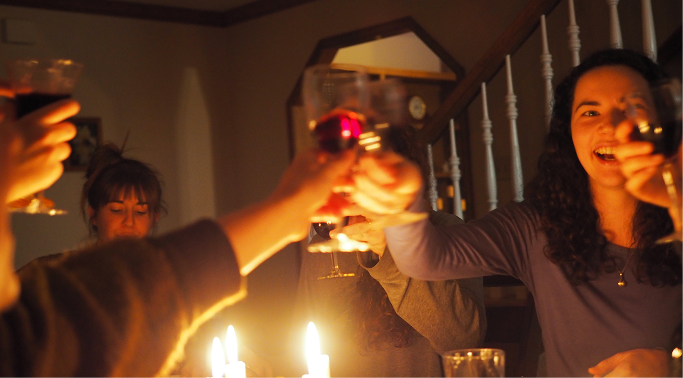
Out of that parish community, and out of conversations around prayer, study, and hospitality, the Brazos Fellows program was born in 2018.
The idea was to invite recent college graduates and others in transitional seasons into a nine-month fellowship structured around a common Rule of Life. The fellows pray Morning Prayer together each weekday. They gather for dinner each week in homes around the parish, study together, work part-time in Waco, and meet with spiritual directors and vocational coaches.
Paul says the transformation that happens in a Brazos Fellow is rarely what they expect. One fellow entered the program planning to move to Washington, D.C., work in the nonprofit world, and “change the world.” Halfway through the year, she began to realize that some of her desire to do something impressive was tied to a deeper longing to prove that she mattered.
“What a good thing to learn at age 22 instead of waking up at 30 or 40 and going, ‘What am I doing?’” Paul said.
Another fellow came wanting theological education—to get clearer about what she believed. But over the course of the year, she found that the Lord was doing deeper heart work, teaching her in a new way that she was truly loved by God.
For Paul, that is the core of the program.
“The thread through all of these stories is this identity as God’s child,” he said. “By inhabiting this rhythm of prayer and community, you come to know yourself as loved by Christ.”
He has met many bright, sincere young adults who want to grow theologically and spiritually, but do not necessarily sense a call to ordained ministry or seminary. The question for him was simple: Why shouldn’t the local church offer them something more?
As the Brazos Fellows program matured, the Gutackers increasingly heard questions from other churches about whether the model could work in their own parishes.
At first, Paul was hesitant. Waco is its own particular context, and Christ Church has its own culture and resources. Not everything about Brazos Fellows could simply be copied and pasted elsewhere. But as the program’s community of alumni grew year after year, Paul began to notice what had stayed with them.
“The most transformative practices were meeting with Jesus in the Daily Office and being in deep community with others,” he said.
Those were not Waco-specific. Those were practices any Anglican parish could begin to recover, and the Brazos Societies Project began.
The Brazos Societies Project
The Brazos Societies Project is empowering local parishes to establish communities organized around a common Rule of Life. These church-based Brazos Societies invite emerging adults to take on formative Christian practices together: common prayer, shared meals, theological study, and sabbath rest.
The prayer of the program is that God will work through these communities of practice to raise up mature Christians who are equipped for faithful, joyful, and orthodox ministry (lay and ordained).
“The Brazos Societies Project is not about creating identical programs across the province,” Paul explains. “A parish that has a vision for this kind of formation can take our Common Rule and adjust it to where they are and who they have.”
Already, societies have launched in several churches across the ACNA, with a number of other parishes in the planning stage of building their own Society, like:
- St. Basil's Society (La Mirada, CA)
- Magis Society (Canton, OH)
- The St. Aidan Fellowship (San Diego, CA)
- The St. Alban's Fellowship (Wheaton, IL)
For Trinity, the question is exciting.
“What would it mean for Trinity if more churches were sending seminarians who had already experienced this kind of formation?” Paul asked. “How much further could Trinity take them if their local parish had helped them form habits of prayer and study in community?”
This is where Trinity’s Anglican Formation Network (AFN) comes in.
The AFN exists to gather, encourage, and connect leaders who care about robust Anglican formation for the future of the ACNA and the wider Church.
“I take the founding vision of the AFN to be,” Paul reiterated, “How will the future of the ACNA be different if people who care about this kind of formation grow in friendship with each other?”
Through the AFN, Trinity is becoming a hub for these kinds of friendships and conversations: among churches, scholars, pastors, catechists, and institutions—praying, learning, encouraging one another, and asking what the Lord might be doing for the future of Anglican formation.
“Trinity is the perfect hub for that,” Paul said, “a place that invites people to come and to build friendship across the province. We won’t know how fruitful that is until eternity—but I can see fruit already, and it’s just beginning.”
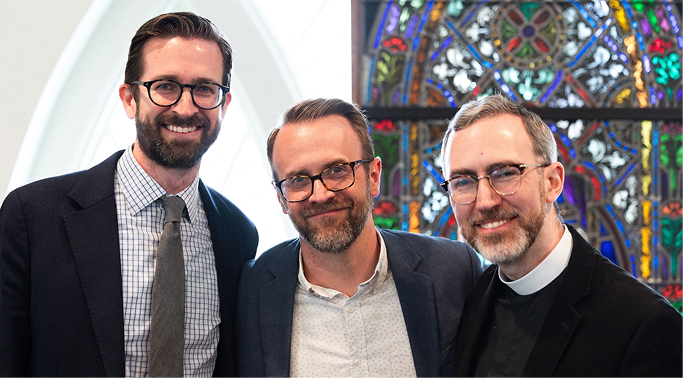
At Trinity, we care deeply about rigorous academics and seminarians formed for mission. The Church needs leaders who can read carefully, think faithfully, teach clearly, and hand on the faith once delivered to the saints.
But academics are not meant to stand alone. They belong inside a larger life of formation and catechesis: Morning and Evening Prayer, Eucharist, study, service, and the ordinary rhythms by which the Holy Spirit shapes the people of God.
This is why Trinity is grateful for Dr. Paul Gutacker, the Brazos Fellows, and the Brazos Societies Project. Because what happens at 7:15 a.m. in Waco, TX, is strengthening the Church across the ACNA and the world.
From the Substack of
Dean & President Bryan Hollon
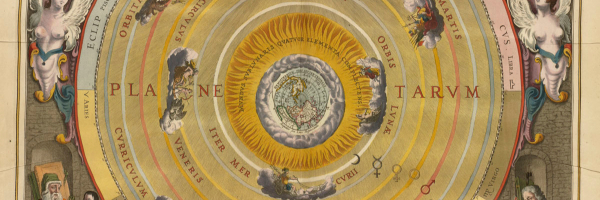
In his latest essay, Dr. Bryan Hollon, Dean and President of Trinity Anglican Seminary, suggests our diminished vision of the priesthood may be connected to something even deeper: we've lost sight of the rich, classical understanding of order itself.
For much of Christian history, "order" pointed to the deep, divinely ordered structure of reality—a vision in which human flourishing comes through conformity to God's created order, and the priesthood is understood as an honorable, compelling, and necessary vocation within that order.
As that older vision has faded, so too has our imagination for ordained ministry. Drawing on Scripture and voices including Augustine, Boethius, Richard Hooker, Dante, George Herbert, and C.S. Lewis, Hollon explores how recovering a classical understanding of order can also help recover a richer vision of the priestly vocation.
Read the full essay and subscribe to Bryan's Substack to catch future reflections on theology, culture, and the Christian life.
Upcoming Event
Join Us for Our 50th Anniversary Homecoming Reunion Weekend
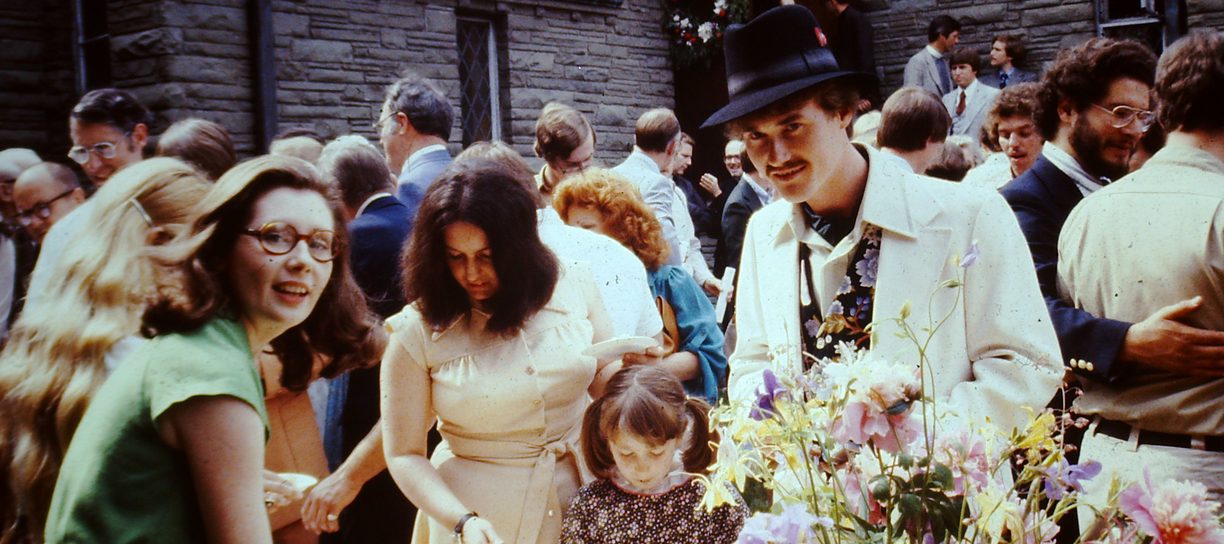
You’re invited to celebrate Trinity Anglican Seminary’s 50th Anniversary Homecoming Reunion Weekend on October 1-3, 2026. Highlights include:
- Alumni Kneelers Flag Football Game and Food Trucks
- Memorial Evening Prayer
- Alumni Meet-Up Dinners
- And more!
Upcoming Event
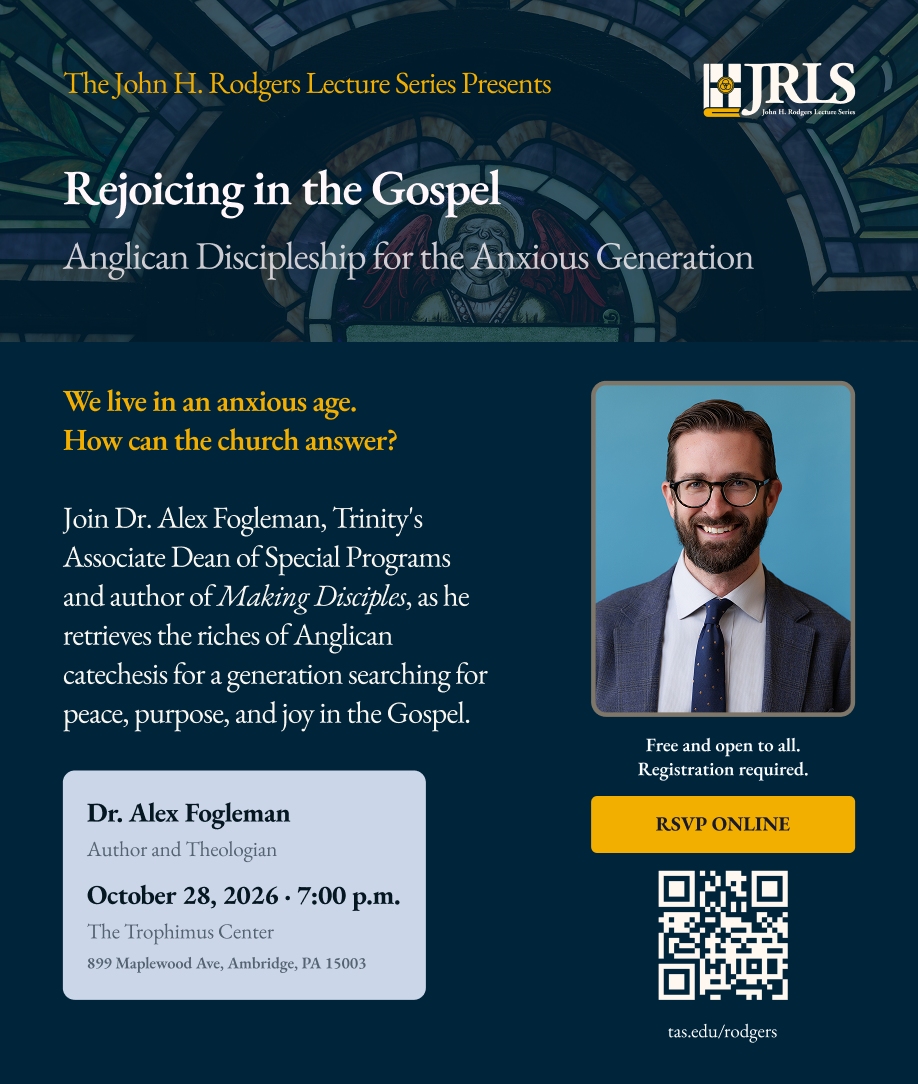
John H. Rodgers Lecture Series
More Trinity Stories
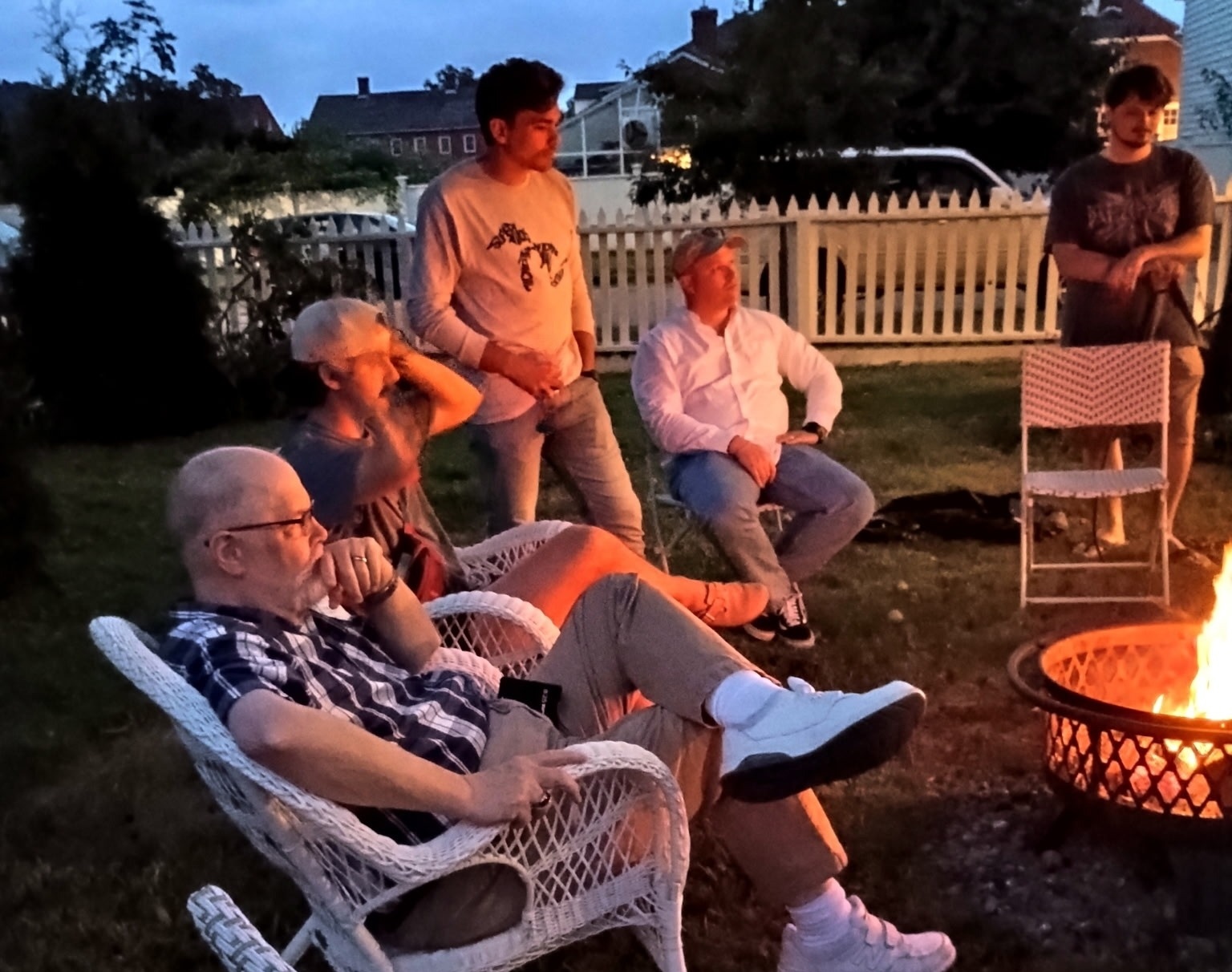
Hopes for the year with seminary friends
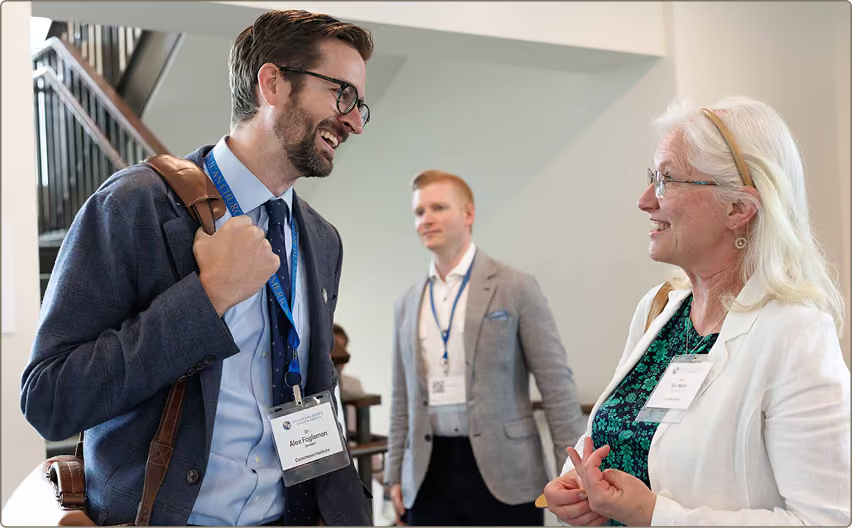
A New Path for the DMin