The Trophimus Center



The Trophimus Center is Trinity’s home for worship, learning, and community life—a vibrant hub designed for theological education and global church gatherings. Anchored by the newly consecrated Chapel of the Good Shepherd and a baptismal font with stone from Ephesus, the Center pairs sacred beauty with state‑of‑the‑art spaces for liturgical training, formation, and events. Step inside to pray, study, and gather with the wider church as we form leaders for Christ’s mission.
United Presbyterian Church of Ambridge
The building now known as the Trophimus Center began as the Maplewood Avenue home of Presbyterian congregations that grew alongside the region’s industrial boom. At the turn of the twentieth century, the local Presbytery established two landmark churches: one on Merchant Street in 1904, and a second on Maplewood Avenue in 1906. From the beginning, the two sites developed as sister congregations.
The first portion of the Maplewood church—recognized by its striking red stone façade and tower—was completed by 1907. A major expansion followed in the 1920s, when the nave was finished with a domed roof (among the largest in the area) and prominent spires. That work also introduced some of the building’s most treasured artistic features: a large Schantz pipe organ and a series of stained-glass windows made from marble-like opalescent “Kokomo glass,” part of an American tradition originally patented by John LaFarge and later made famous by Tiffany. Among these are the great Good Shepherd window and a rose window set above the choir gallery, together forming a luminous focal point that still defines the room’s character.
In the decades that followed, the Maplewood building served as a hub of worship and community life—hosting services, music, teaching, and the social rhythms that shaped congregational life in Ambridge for generations. Meanwhile, the Merchant Street church was expanded in the 1950s, reflecting the mid-century needs of its own congregation. Together, the two chapels stood as a paired witness to a shared Presbyterian heritage.


Closure and Purchased by Trinity
As the steel mills closed and the population declined in the 1970s, congregational life across the region changed dramatically. The Merchant Street congregation ultimately merged with its sister congregation on Maplewood, bringing two long-connected communities into one. This transition also created an opening for Trinity: the Merchant Street chapel and the adjacent, closed A&P Grocery Store were purchased as the first two buildings of the newly founded Trinity Episcopal School for Ministry.
By 2021, the congregation—then known as United Presbyterian Church of Ambridge—concluded it could no longer maintain the aging building, which had suffered disrepair and even a few fires. They merged with a Lutheran congregation down the road. For years Trinity had hoped for a chapel large enough to host commencements and major gatherings. When the chance came to preserve and restore this historic property, a benefactor purchased and donated it to Trinity. Over several years, Trinity board members and staff led a thorough renovation and expansion.
The Good Shepherd Chapel
At the heart of the building is the worship space, newly dedicated as the Chapel of the Good Shepherd. The nave was fully restored, and seating was reoriented toward the great window of the same dedication—an arrangement that better supports Anglican liturgy and procession. The organ was restored by the original installers, and the windows were fully conserved by Willet Hauser Studios, renewing the color and clarity that define the room’s character. Above, the dome was newly lined with heraldic devices honoring the provinces and dioceses that have shaped Trinity’s history.
To serve the rhythms of Anglican worship, Trinity also commissioned new furnishings: a two-level lectern and pulpit, echoing the three-tiered preaching desks of the Evangelical period, and an equally prominent and beautiful Holy Table. A bespoke processional cross was crafted in the cross fleury form—prominent throughout the building’s decorative vocabulary—and bears the symbols of the four evangelists along with the Agnus Dei. Today, the Chapel of the Good Shepherd hosts our weekly community Eucharist as well as major feasts and special services throughout the year.


Founders’ Hall and the Narthex
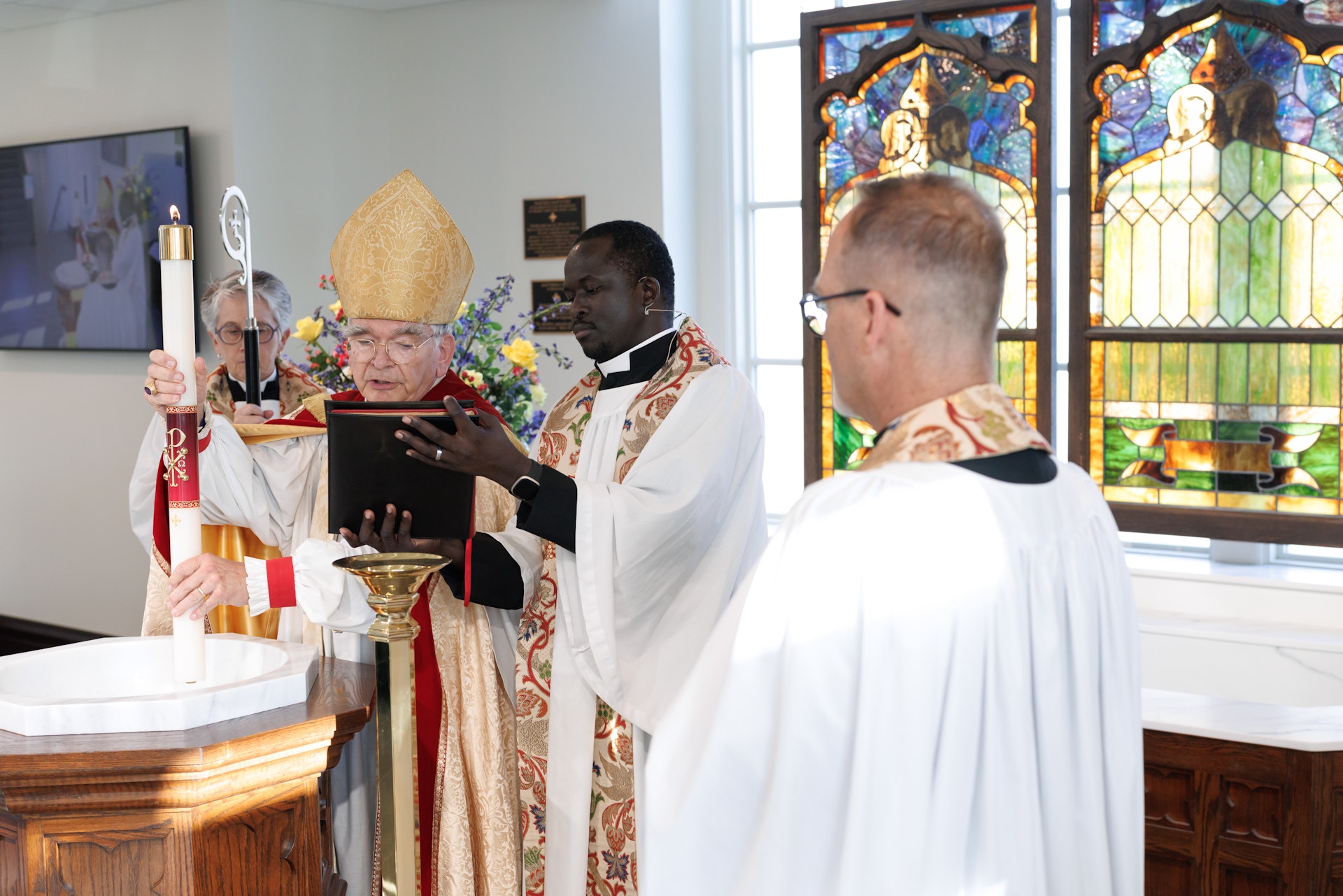
A significant extension added a spacious narthex, elevators, and modern restrooms, improving accessibility while preserving the building’s historic character. The narthex includes a full-immersion baptismal font as well as a traditional bowl font cut from stone from Ephesus—the home of Trophimus, Paul’s companion, for whom Trinity dedicated the building. To support the building’s expanding role as a venue for worship and public gatherings, a state-of-the-art audio, visual, and lighting system was installed throughout.
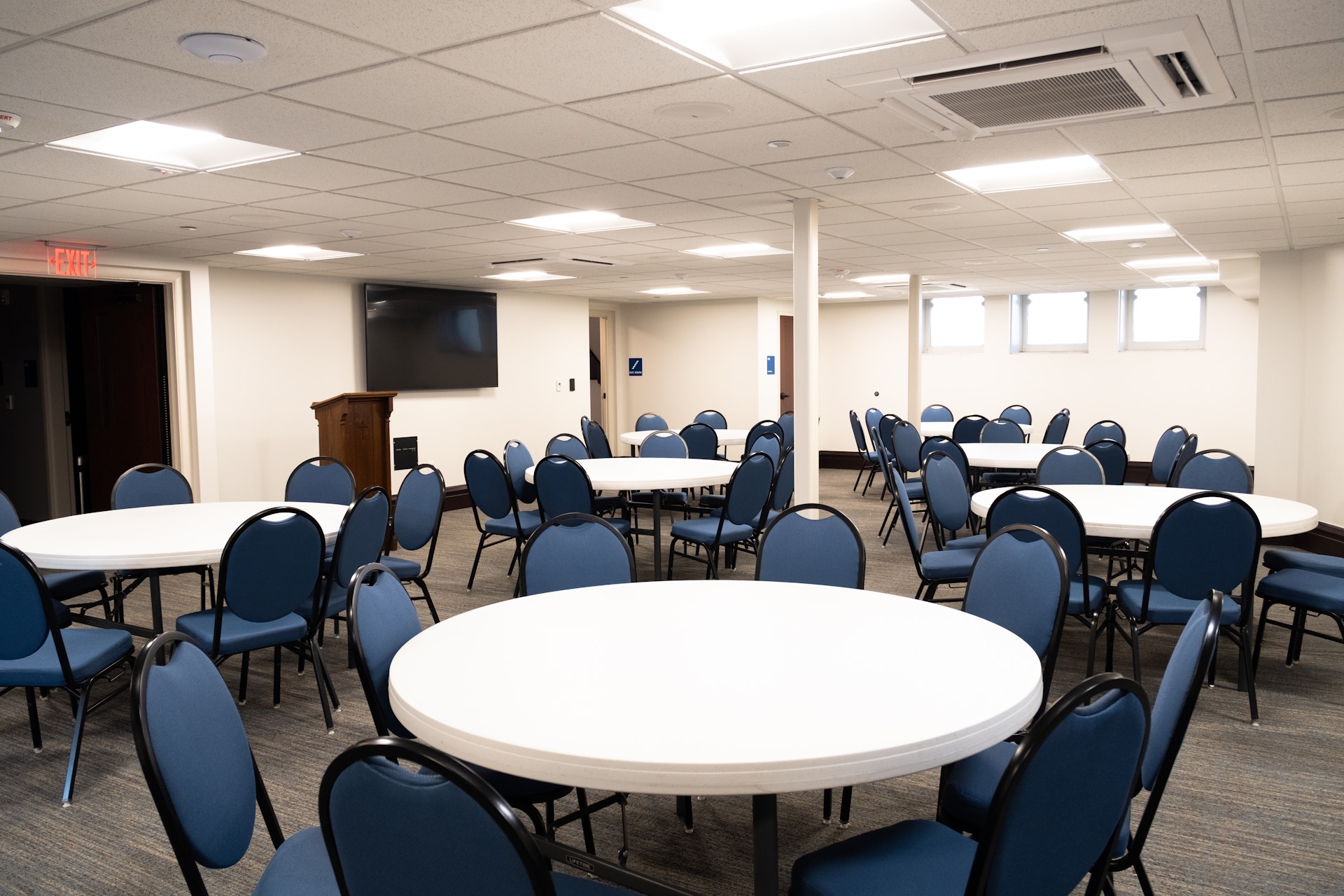
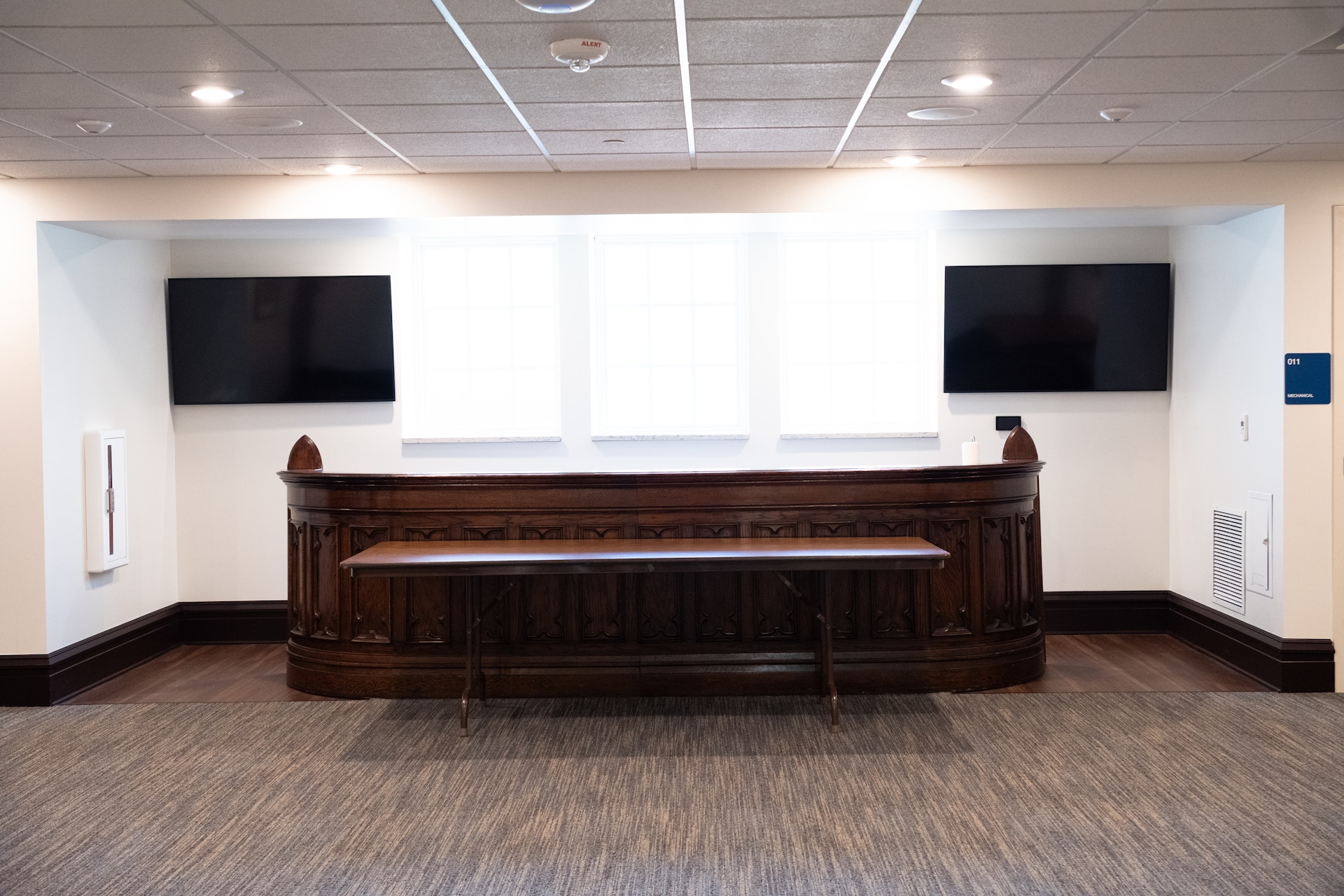
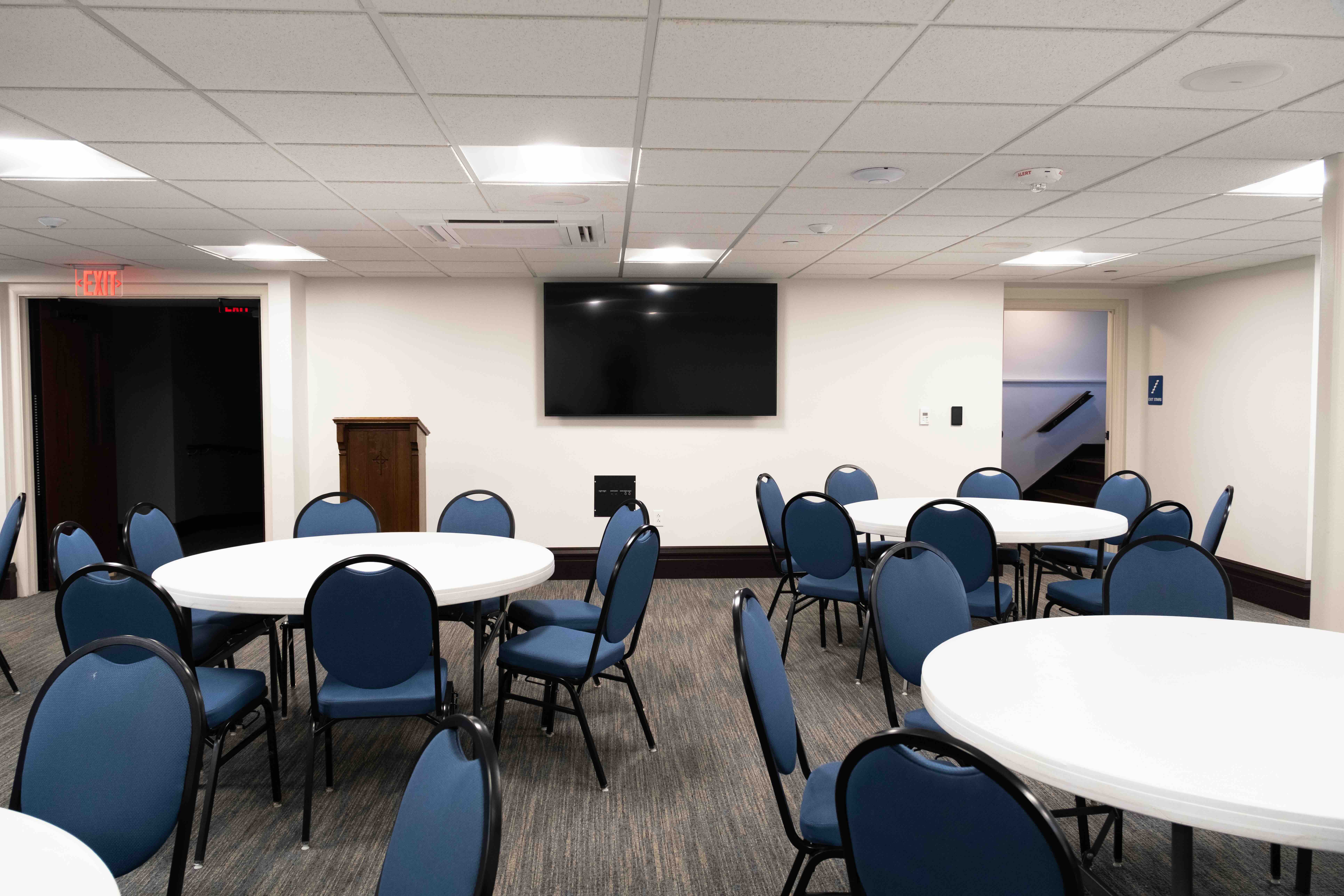
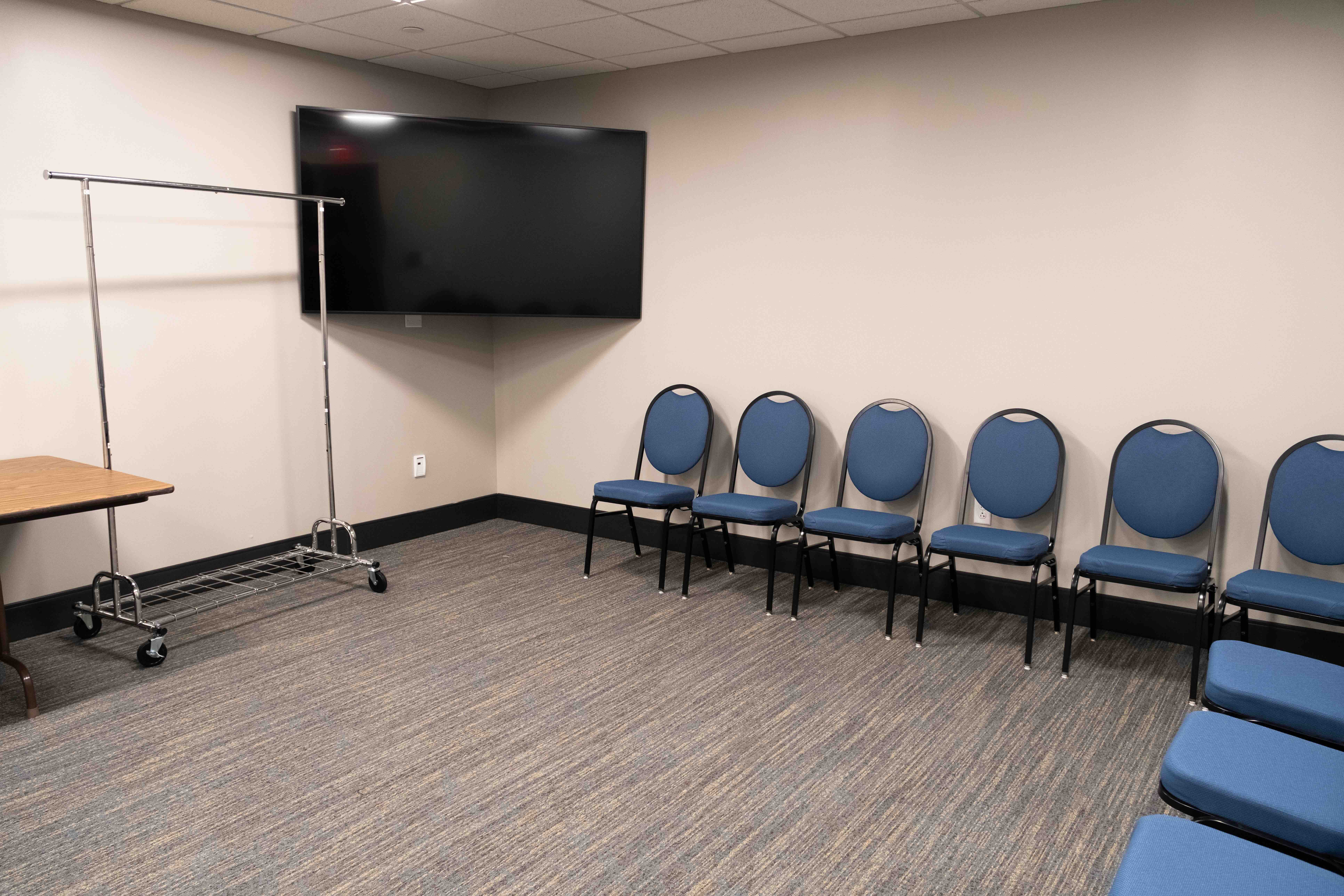
Above, the upper narthex features a neo-gothic stained-glass window of the Annunciation, crafted by Pittsburgh Stained Glass for the 1933 Chicago World’s Fair. The lower level was completely modernized, transforming the former parish hall into Founders’ Hall with additional breakout rooms named for great saints of the Church and Trinity’s heritage. Together with the Chapel, these spaces were designed with flexibility and hospitality in mind—equipping the Trophimus Center to serve both the wider Church and the local community.
Ribbon Cutting & Dedication
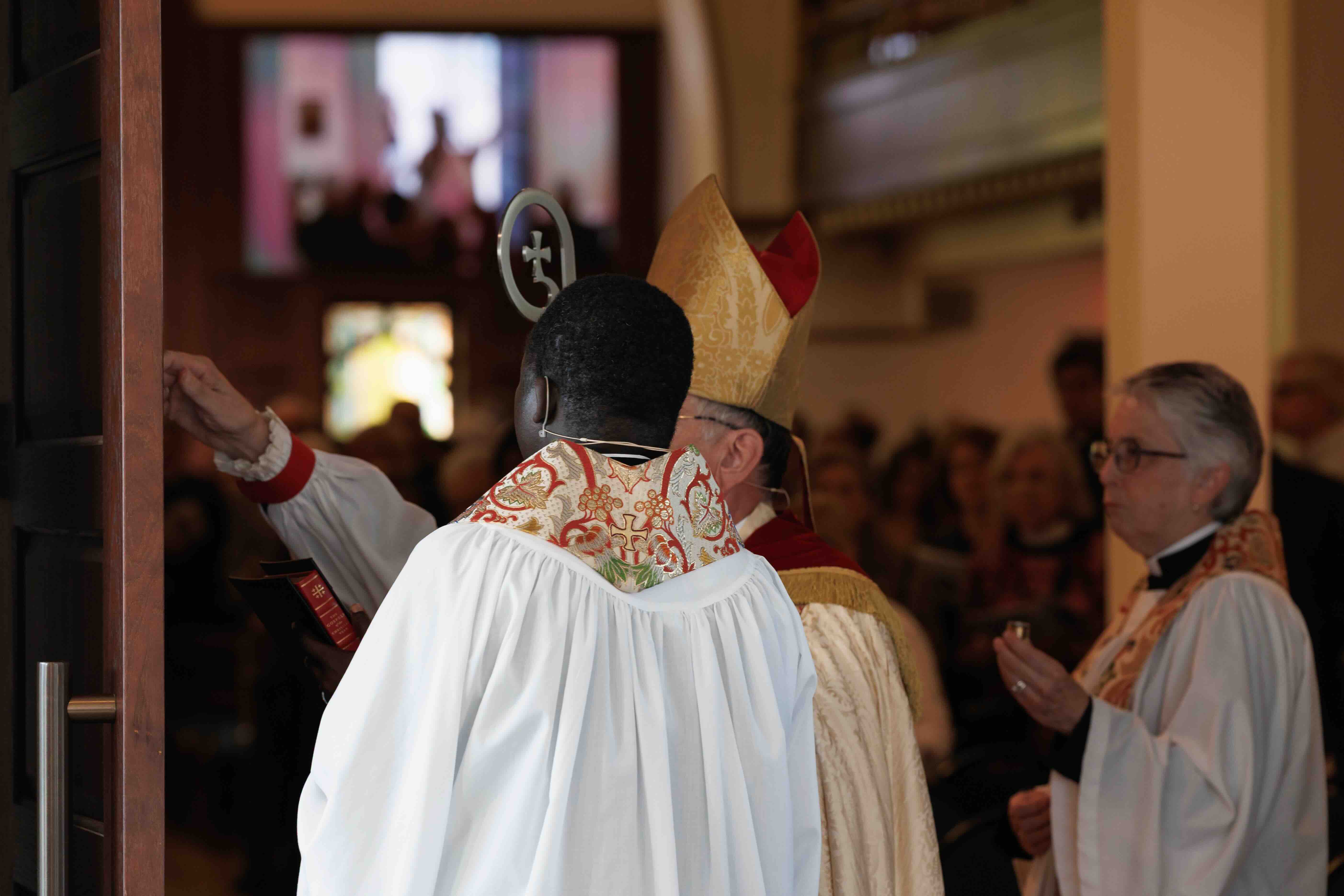
In May 2025, Trinity dedicated the building and consecrated the Chapel of the Good Shepherd. Since then, the Trophimus Center has hosted Commencement, ACNA Provincial Council, ordinations, concerts, borough meetings, and many other gatherings—deepening Trinity’s musical and liturgical life in the community and fulfilling the original vision for the space. Having been a place of worship and gathering for more than 120 years, Trinity is grateful to carry that tradition forward for decades to come.



Trinity is to be an evangelical seminary in the Anglican tradition. To this end we develop Christian leaders who can plant, renew, and grow churches that make disciples of Jesus Christ.
Contact Us