bi925
Enscripturation: Finding Yourself in the Scriptures
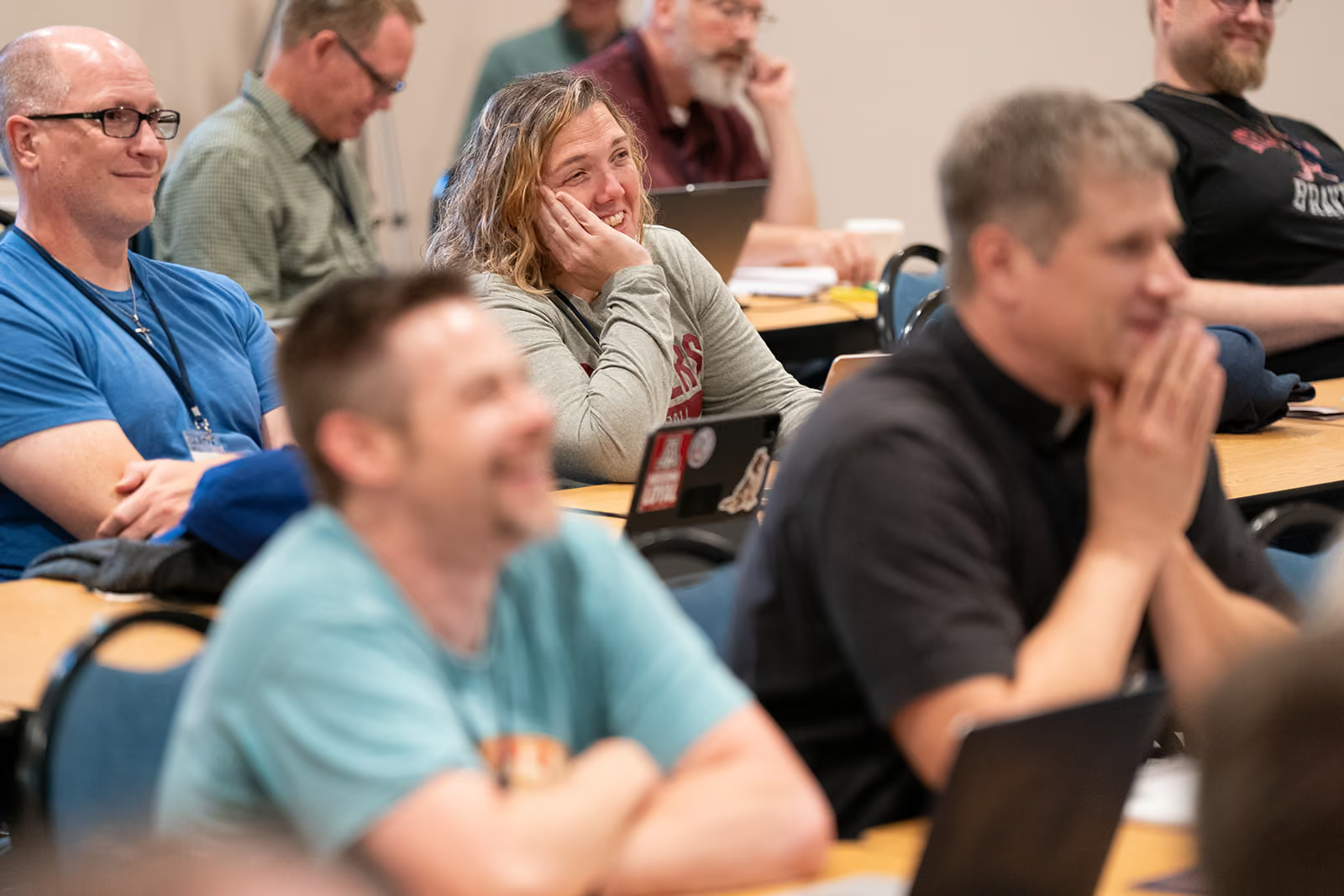

An exploration of the ancient Christian practice of “finding” oneself in Scripture—reading not as a detached observer but as a participant in God’s redemptive drama. Through close engagement with primary texts and moments from reception history, you will see how believers and communities have located their lives within the biblical story across centuries. The course models an Anglican way of reading that is canonical, prayerful, and ecclesial, integrating lectio and exegesis so that Scripture forms identity, desire, and daily practice for the life of the Church.
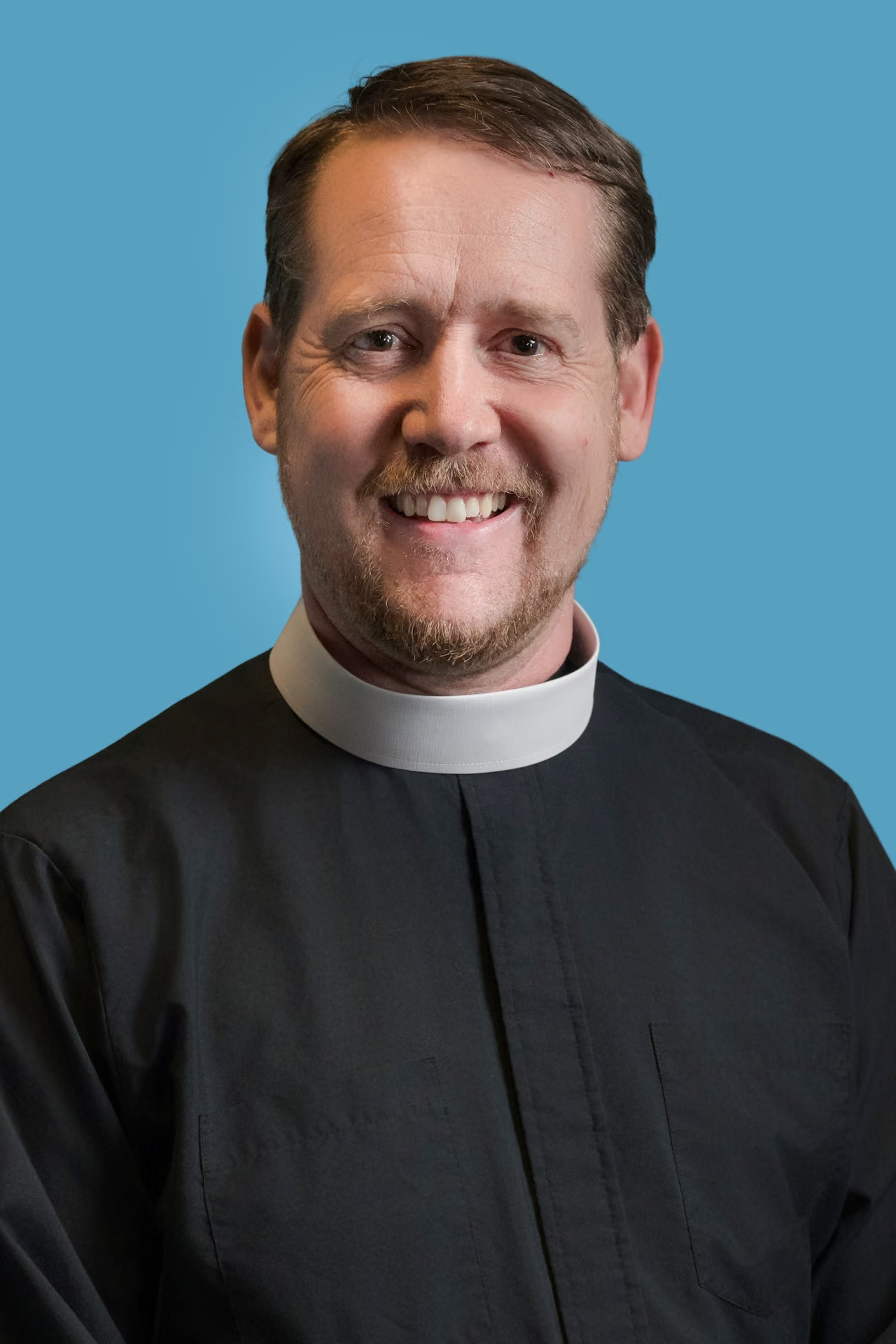

Rev. Dr. David Ney does more than just invite students to deepen their knowledge of Christian history, he invites them to find their place within it as members of the Church. With a BA in Philosophy and Music from the University of Lethbridge, MDiv and ThM degrees from Regent College, and a ThD from Wycliffe College, he serves as Associate Professor of Church History. His Anglican formation helped him see that Anglicanism offers a vision for thick formation that is creedal, liturgical, social, embodied, and scriptural. He enthusiastically embraces the vocation of shepherding young evangelicals that are making a home in Anglicanism, and Trinity is the primary context for this calling.
Dr. Ney's goal as a teacher is to train students to see all things in the light of Christ, and the study of Church history, in this case, is a laboratory for this process of discovery. His hope is that students will be willing to engage challenging ideas charitably and that graduates will help other Christians see that the Word of God is living and active.
Dr. Ney is convinced that there is no substitute for residential theological education since education for ministry is not just about knowledge-acquisition, but is, rather, about breaking bread and fellowship, dialogue and common prayer. Dr. Ney and his wife enjoy having students into their home and his office is a place of attentive listening and prayer. He enjoys singing, playing the piano, soccer, hiking, and skiing.

Trinity is to be an evangelical seminary in the Anglican tradition. To this end we develop Christian leaders who can plant, renew, and grow churches that make disciples of Jesus Christ.
Contact Us