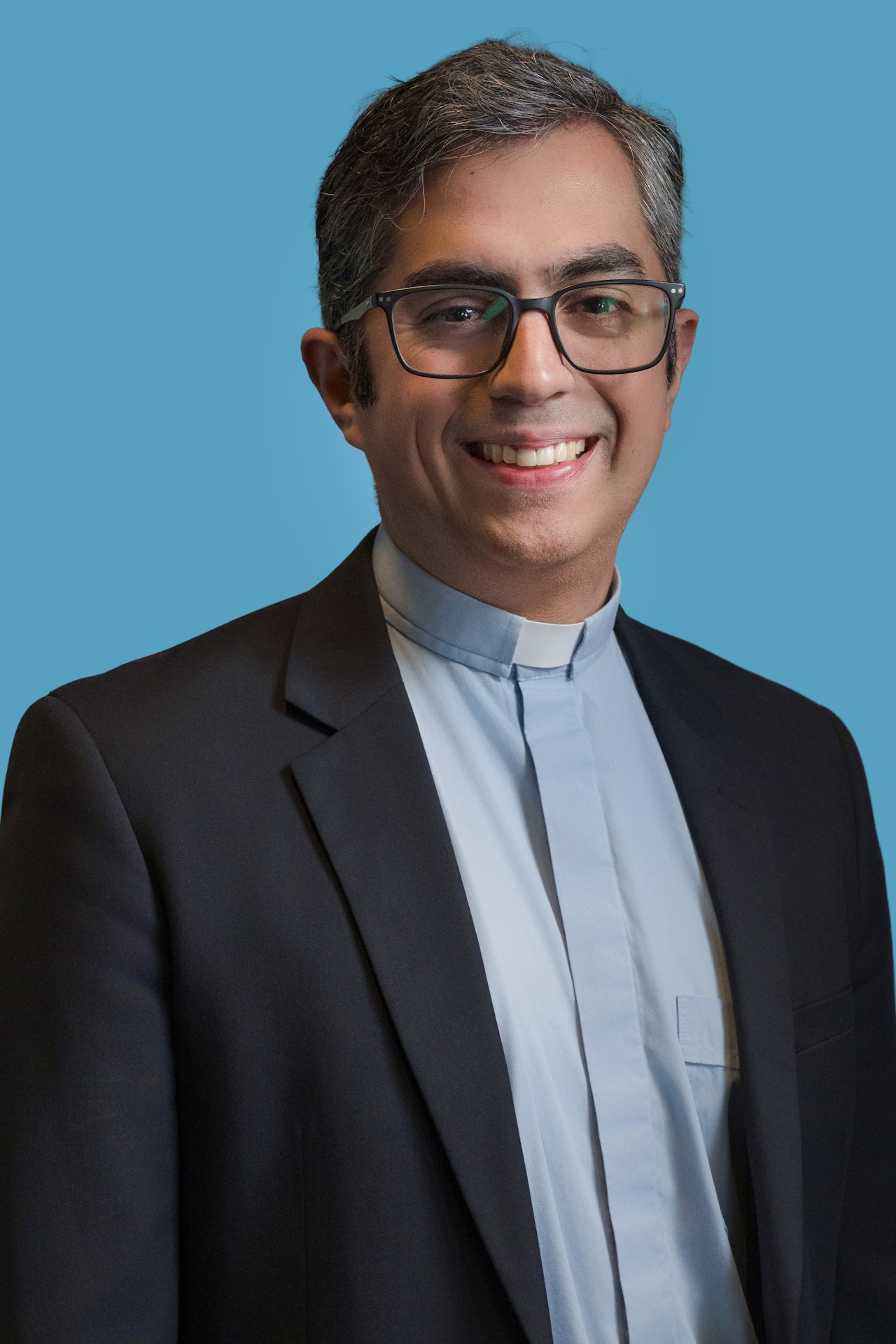
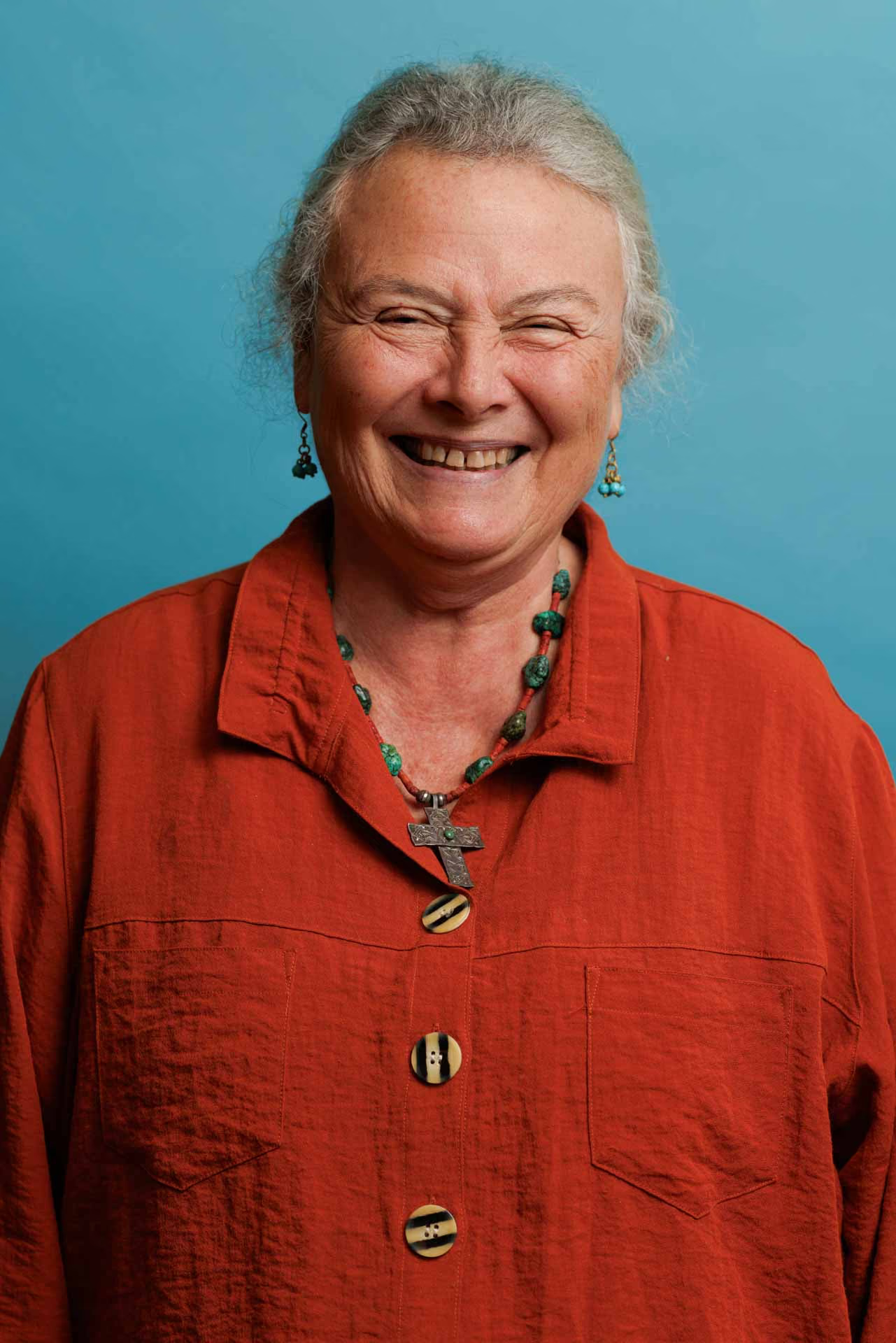
Before coming to Trinity, the Rev. Dr. Jacob Rodriguez served for twelve years across Ethiopia, Oxford, and Washington, DC in theological education, discipleship mobilization for Muslim background believers, and pastoring. In each context, he saw the Lord working through well-trained missionaries and pastors who mentored him in faithful gospel service. He subsequently sensed a call to train the next generation within the global Anglican communion. As a New Testament scholar with missional and pastoral experience across three continents, he trains aspiring leaders to interpret Scripture faithfully as the foundation of effective ministry.
While Dr. Rodriguez finds great joy in classroom dialogue—engaging difficult questions through the whole counsel of Scripture—he believes the deepest formation happens in one-on-one office hours, the weekly Greek reading group he leads, prayer lunches with advisees, and early morning runs with students. As Associate Director of the Stanway Institute, he models a love for Scripture rooted in regular immersion in the biblical text, especially in its original languages. What he treasures most is communal life shared in daily office, lunchtimes in the commons, talent shows, flag football, and running into Trinity friends at local Ambridge coffee shops. His threefold hope for students: that they articulate the one gospel as proclaimed across the New Testament, understand it within the storyline of the whole biblical canon, and see how it addresses every issue of our day. He loves playing piano for worship—and noodling jazz on the out-of-tune commons piano.
Dr. Rodriguez's scholarship focuses on early Christian Gospel literature, particularly the four canonical Gospels and their relationship to non-canonical texts like the Gospel of Thomas, the Diatessaron, and the Epistula Apostolorum. His doctoral thesis, published with Mohr Siebeck, demonstrated that the canonical Gospels formed the scriptural center of gravity for second-century Christian reflection on Jesus. His expertise extends to New Testament manuscripts and the related disciplines of papyrology, codicology, and textual criticism, as well as second-century church fathers including Papias, Justin Martyr, Irenaeus, and Clement of Alexandria. He is particularly interested in Judaism from 200 BC to 200 AD, the formation of the New Testament as Scripture and canon, disability theology and the healing tradition in the canonical Gospels, and Muslim background believer discipleship movements in the Horn of Africa. His current projects include co-editing a volume on Pneumatology in the New Testament (contributing the chapter on Mark) and writing a monograph on how Jesus' Sabbath healings speak to embodied flourishing and disability.

Trinity is to be an evangelical seminary in the Anglican tradition. To this end we develop Christian leaders who can plant, renew, and grow churches that make disciples of Jesus Christ.
Contact Us